The Core-Back-Hip Connection: Beyond the Six-Pack
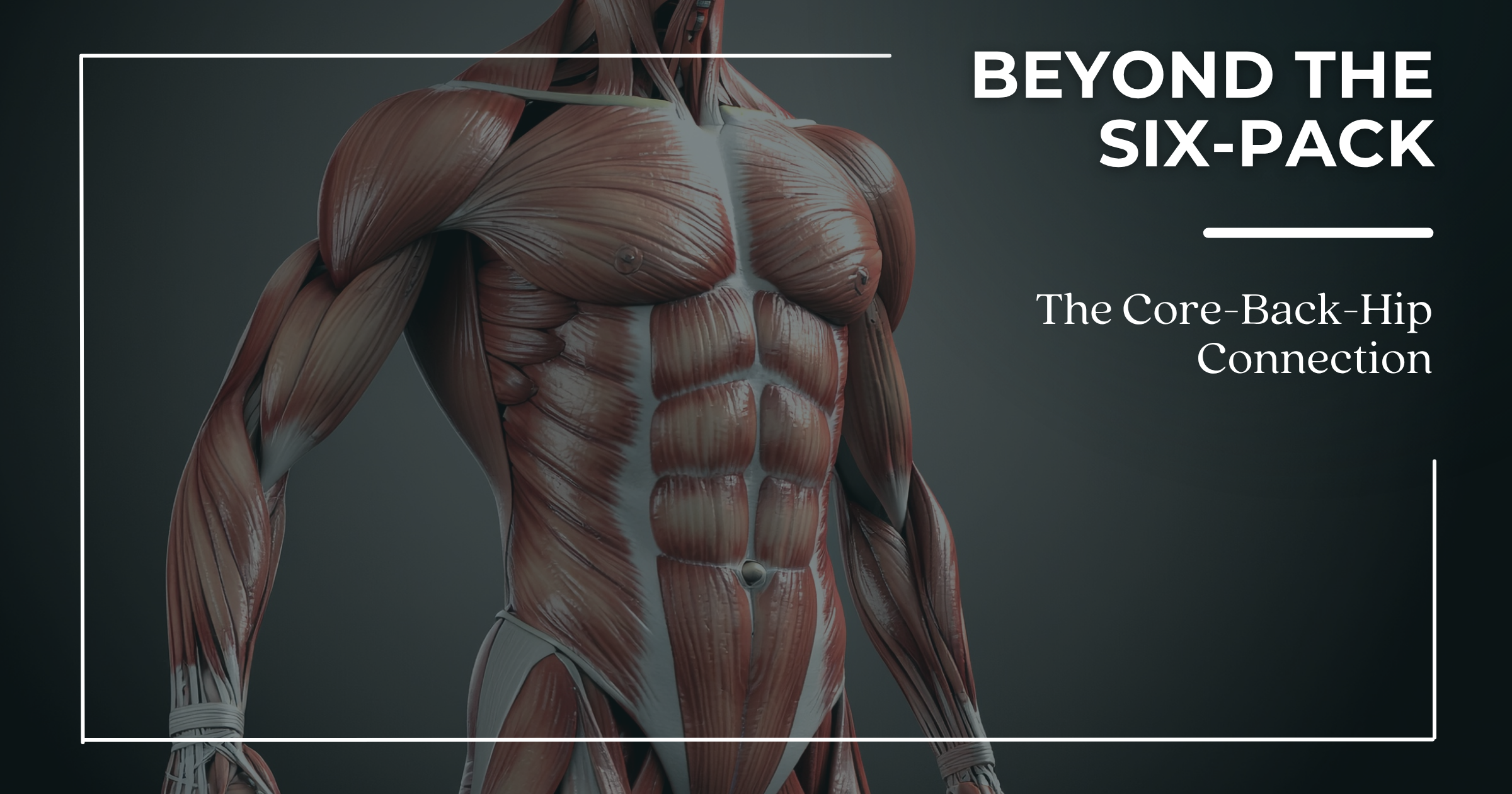
When we hear the word "core," most of us visualize a defined set of abdominal muscles. However, from a clinical perspective at Rivers RMT, the core is less about aesthetics and more about an integrated "cylinder" of support. Understanding this connection is the first step in resolving persistent low back, hip, and even neck tension.
Redefining the Core: The Functional Cylinder
The core is a 360-degree system that stabilizes the spine and transfers force between the upper and lower body. Rather than just the Rectus Abdominis (the six-pack), the functional core is comprised of:
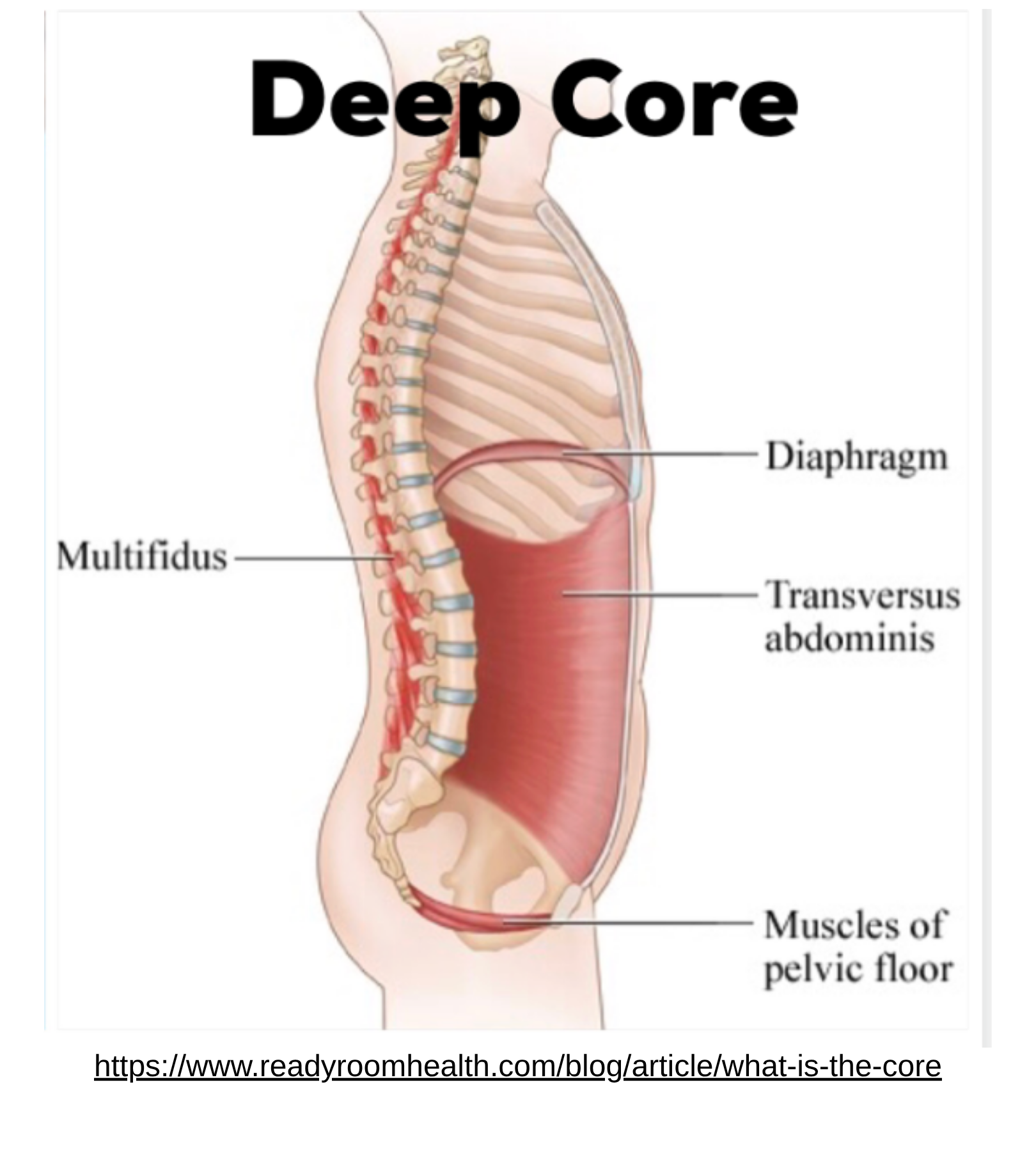
The Roof: The Diaphragm (your primary breathing muscle).
The Floor: The Pelvic Floor muscles.
The Back: The Multifidus (tiny, powerful stabilizers along the spine).
The Corset: The Transverse Abdominis (the deepest layer that wraps around your midsection).
The Anchors: The Glutes and Hip Flexors.
Clinical Insight: Think of your core as a soda can. If the top (diaphragm) or bottom (pelvic floor) isn't aligned, or if there’s a dent in the side (weak abdominals), the "can" loses its structural integrity under pressure.
The "Proximal Stability" Theory
A foundational principle in biomechanics is that proximal stability leads to distal mobility. Therefore the inverse would be proximal weakness leads to distal immobilization.
If your brain perceives that your spine (the center) is unstable, it will "lock down" the surrounding joints—the hips and shoulders—as a protective mechanism. This is why many people feel they have "tight hamstrings" or "stiff hips" that never improve with stretching alone. Often, the tightness isn't a length issue; it’s a stability issue. By strengthening the core, we signal to the nervous system that it is safe to release the tension in the hips.
The Core-Hip-Back Triangle
These three areas are anatomically and neurologically linked. When one fails, the others overcompensate:
Lower Back (The Victim): The lumbar spine is designed for stability. When the core is weak, the lower back takes on the load of movement it isn't meant to handle.
The Hips (The Drivers): The glutes are the engines of the body. If the glutes are "sleepy" (often due to prolonged sitting), the lower back muscles (Erector Spinae) often overwork to pick up the slack. (Commonly seen when you bend to pick up a pencil and injury your low back)
The Psoas (The Bridge): This muscle connects your lower spine directly to your femur (thigh bone). It is the only muscle that links the upper and lower body, making it a major player in both back pain and hip mobility.
Evidence-Based Support
Research consistently shows that targeted core stability is very effective for chronic pain management:
Stability over Strength: A study in the Journal of Orthopaedic & Sports Physical Therapy highlights that the timing and coordination of deep core muscles (like the Transverse Abdominis) are more important for back health than the raw strength of the outer muscles (rectus abdominis).
The Glute-Back Link: Research published in Archives of Physical Medicine and Rehabilitation suggests that individuals with chronic low back pain often demonstrate significantly weaker gluteus maximus muscles and altered hip movement patterns.
HEre at Rivers RMT
In our treatments, we don't just look at where it hurts. If you come in with hip pain, we take into consideration your entire system, including core stability:
How you can start today:
Stop "Bracing" Constantly: You shouldn't be sucking your stomach in all day. This creates unnecessary pressure.
Focus on 360° Breathing: Inhale so that your ribs expand out to the sides and back, not just your chest.
Book a Maintenance Session: Let’s look at your "Cylinder" and see where the pressure is leaking.
The Home Lab: 2 Exercises to Reset Your "Cylinder"
1. The 360° Diaphragmatic Breath
The Goal: Reset the "Roof" of your core and down-regulate the nervous system.
How to do it: Sit or lie down. Place your hands around the bottom of your ribcage (fingers in front, thumbs wrapping toward your back).
The Movement: Inhale through your nose. Instead of your chest rising toward your chin, feel your ribs expand outward into your hands in all directions—front, sides, and back.
Why it works: Many "back pain" clients are chest breathers. This creates constant tension in the neck and prevents the deep core (Transverse Abdominis) from engaging naturally.
2. The Modified Dead Bug
The Goal: Teach the spine to stay stable while the limbs (hips) move.
How to do it: Lie on your back with your knees bent at 90 degrees (legs in the air) and arms reaching toward the ceiling. Press your lower back lightly into the floor—enough to close the gap, but don't crush a grape.
The Movement: Slowly lower your right heel to tap the floor while keeping your back glued to the ground. Return to center and switch legs.
The Challenge: If your back arches off the floor as your leg lowers, your "cylinder" has lost its pressure. Only go as low as you can maintain a flat back.
Why it works: This mimics the mechanics of walking. It trains the core to protect the spine while the psoas and hip flexors are active.
Resources for Further Reading
McGill, S. M. (2015). Low Back Disorders: Evidence-Based Prevention and Rehabilitation. (The gold standard for spinal mechanics).
Hides, J. A., et al. (2001). Long-term effects of specific stabilizing exercises for first-episode low back pain. Spine.
Cook, G. (2010). Movement: Functional Movement Systems.
This is not medical advice. Please speak to your health care practitioner before starting any activity, or trying any treatment options.
This blog post was partially developed using AI to generate ideas and refine the structure. The author made the final edits and choices